Choosing an espresso machine gets much easier once you stop asking which model is “best” and start asking how you actually want to make coffee. The right machine depends on how much control you want, whether you need a grinder, how often you make milk drinks, how much space you have and how much daily maintenance you are willing to handle.


How this guide was built: Espresso Index has not personally tested every machine discussed here. This guide uses current manufacturer documentation and the research behind our existing reviews, comparisons and buying guides. The goal is to help buyers match machine type to their actual routine rather than rank one design above every other.
Start With One Question: How Involved Do You Want to Be?
This decision determines more than almost any specification.
- Traditional semi-automatic: you grind, dose, tamp, brew and usually steam milk manually.
- Guided semi-automatic: you still use a portafilter, but the machine helps with some variables such as grind choice, dosing or milk frothing.
- Fully automatic: the machine grinds, doses and brews internally, and many models also prepare milk automatically.
If you enjoy the process of learning espresso, a semi-automatic machine is usually the better starting point. If your priority is getting a repeatable drink with fewer manual steps, fully automatic is usually the more natural fit.
Our Semi-Automatic vs. Fully Automatic Espresso Machines guide goes deeper into that choice.
Step 1: Decide on the Machine Type
Choose a traditional semi-automatic machine if:
- You want to learn how grind, dose and extraction affect espresso.
- You want manual control over milk texture.
- You may want to upgrade your grinder separately.
- You prefer a more visible, hands-on brewing process.
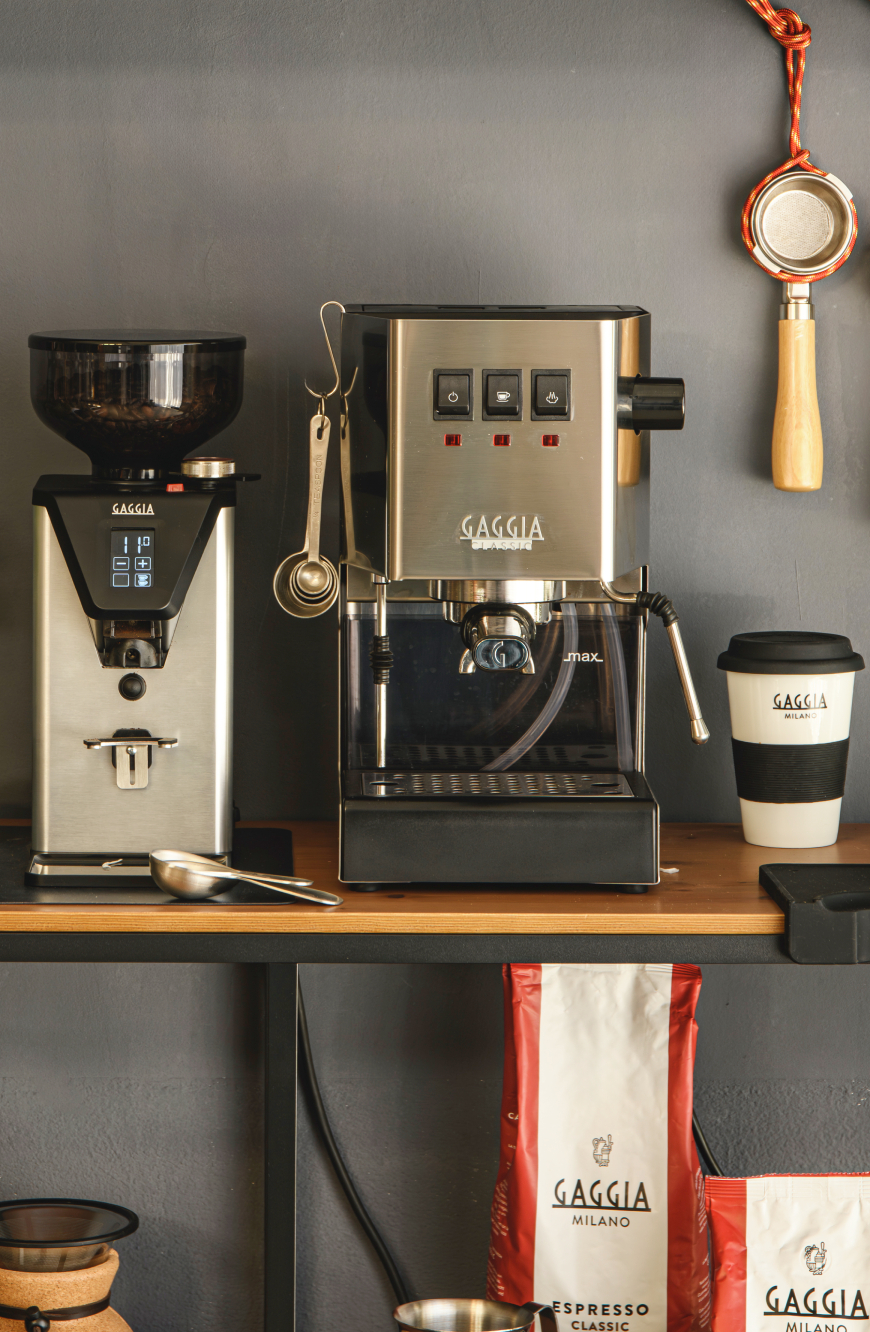
Examples already covered by Espresso Index include the Breville Bambino BES450, Gaggia Classic Pro E24, De’Longhi Classic EM350BK and Breville Barista Express BES870.
Choose a guided semi-automatic machine if:
- You like the idea of using a portafilter but do not want to manage every variable alone.
- You want automated help with grind selection or dosing.
- You want easier milk preparation.
- You want some espresso involvement without a steep learning curve.
The Ninja Luxe Café Premier ES601 is a useful example because it combines a portafilter workflow with Barista Assist guidance, weight-based dosing and automatic milk frothing.
Choose a fully automatic machine if:
- You want whole-bean coffee with minimal preparation.
- You do not want to tamp a portafilter.
- You prefer automatic milk drinks.
- Several people will use the machine.
- Convenience matters more than manual control.
Our Best Automatic Espresso Machines guide currently compares the Philips 3300 LatteGo and Philips 5500 LatteGo in depth.
Step 2: Decide Whether You Want a Built-In Grinder
A grinder is essential if you want to use whole beans, but it does not have to be built into the espresso machine.
Built-in grinder advantages
- Fewer separate appliances to buy
- Cleaner all-in-one setup
- Potentially less combined counter clutter
- Simpler workflow for beginners
Separate grinder advantages
- You can choose the grinder independently.
- You can upgrade the grinder without replacing the espresso machine.
- You are not locked into the grinder built into the brewer.
- It gives enthusiasts more room to build a modular setup over time.
The Breville Bambino vs. Barista Express comparison shows this trade-off clearly: the Bambino requires a separate grinder, while the Barista Express combines grinder and brewer in one appliance.
See our Best Espresso Machines With a Grinder guide if an all-in-one setup is a priority.
Step 3: Think About the Drinks You Actually Make
Do not pay for drink capability you are unlikely to use.
Mostly espresso or Americanos
A simple semi-automatic machine may be enough. Automatic milk systems and large drink menus offer little value if you rarely use them.
Frequent lattes and cappuccinos
Milk preparation becomes a major part of the decision. A manual steam wand gives more direct control but requires technique. Automatic systems are easier and more repeatable.
Several different coffee styles
A broader machine can make more sense. The Ninja Luxe Café Premier combines espresso, drip-style coffee and rapid cold brew, while fully automatic machines such as the Philips 5500 provide a large menu of programmed hot and iced drinks.
Step 4: Choose the Milk System
| Milk system | Best for | Main trade-off |
|---|---|---|
| Manual steam wand | Buyers who want control and are willing to practice | Requires technique |
| Guided/automatic frothing on semi-automatic machine | Buyers who want a portafilter with easier milk preparation | Less traditional workflow |
| Fully automatic milk system | Convenience and repeatable milk drinks | Less manual texture control and more milk-system cleaning |
If milk drinks are central to your routine, this decision can matter more than small differences in brewing specifications.
Step 5: Measure Your Kitchen Before You Buy
Measure width, depth and cabinet clearance before choosing a machine.
- Include the width of a separate grinder when needed.
- Leave enough room to remove the portafilter and operate a steam wand.
- Check access to the water tank and bean hopper.
- Make sure drip trays and brew components can be removed without moving the machine every time.
The Breville Bambino is exceptionally narrow at about 6.1 inches, but it still needs grinder space for whole beans. The Philips 3300 is wider, but its grinder is built in. Our Best Espresso Machines for Small Kitchens guide compares total setup space directly.
Step 6: Be Realistic About Cleaning
No espresso machine is maintenance-free.
Semi-automatic machines typically require:
- Portafilter and basket rinsing
- Steam-wand wiping and purging
- Drip-tray cleaning
- Brewing-system cleaning or backflushing when specified
- Periodic descaling
Fully automatic machines typically require:
- Grounds-container emptying
- Drip-tray cleaning
- Milk-system cleaning
- Brew-group maintenance where applicable
- Water-filter replacement or descaling
- Manufacturer cleaning cycles
Automation reduces preparation effort, but it does not eliminate cleaning. Buyers who dislike maintenance should compare cleaning routines just as carefully as drink features.
Step 7: Match the Machine to Your Experience Level
Complete beginner who wants convenience
A fully automatic machine or a guided semi-automatic machine will usually create the shortest learning curve.
Beginner who wants to learn espresso
A straightforward semi-automatic machine such as the Bambino can be a strong entry point because the workflow remains traditional without requiring a large machine.
Enthusiast who expects to upgrade
A separate machine and grinder usually provide the most upgrade flexibility. A 58 mm platform such as the Gaggia Classic Pro E24 may also appeal to buyers who want a more traditional ecosystem.
Step 8: Do Not Choose by Feature Count Alone
More features do not automatically make a machine better for a particular buyer.
A machine with 20 programmed drinks can be valuable in a multi-user household but unnecessary for someone who drinks only espresso and cappuccino. An automatic milk system can be a major advantage for one buyer and irrelevant to someone who drinks coffee black.
The useful question is not “Which machine has more?” but “Which features remove a problem I actually have?”
Quick Decision Guide
| If this sounds like you… | Start with… |
|---|---|
| I want to learn traditional espresso | Semi-automatic machine |
| I want a portafilter but more guidance | Guided semi-automatic machine |
| I want fresh beans with the least manual work | Fully automatic machine |
| I want to upgrade my grinder later | Separate machine and grinder |
| I want one appliance with a grinder included | Integrated-grinder semi-automatic or fully automatic |
| I make lots of milk drinks and dislike steaming | Automatic milk system |
| I have very limited counter width | Compact semi-automatic such as the Bambino |
| Several people want different drinks | Fully automatic with profiles and larger drink menu |
Where to Go Next
Once you know which machine style fits your routine, these guides narrow the decision further:
- Semi-Automatic vs. Fully Automatic Espresso Machines
- Best Espresso Machines With a Grinder
- Best Automatic Espresso Machines
- Best Espresso Machines for Small Kitchens
Buying Guide Conclusion
The best espresso machine is the one that matches how you want to make coffee every day.
Choose semi-automatic if you want more control, more involvement and room to develop espresso technique.
Choose guided semi-automatic if you want a portafilter workflow with more help and less trial and error.
Choose fully automatic if convenience, repeatability and minimal manual preparation matter most.
After that, narrow the choice by grinder setup, milk system, counter space and cleaning routine. Those factors are more likely to affect daily satisfaction than a long specification list.
Sources
- Breville — Bambino BES450 product information
- Breville — Barista Express BES870 product information
- Gaggia North America — Classic Pro E24 product information
- De’Longhi — Classic EM350BK product information
- SharkNinja — Ninja Luxe Café Premier ES601 product information
- Philips — Series 3300 EP3341/50 product information
- Philips — Series 5500 EP5547/90 product information
Methodology: This guide is research-based. Espresso Index has not personally tested every machine discussed here. Recommendations are based on manufacturer specifications, documented workflow, grinder requirements, milk systems, physical setup and buyer fit. Specifications can change, so key details are periodically rechecked.